19 Jul 2026 | Apex Environmental Services (UK) Ltd
Why Birds Nest on Commercial Buildings
Walk around almost any town or city, look carefully, and you'll notice a familiar pattern. Pigeons gather beneath solar panels, gulls patrol flat rooftops, and starlings disappear into gaps beneath rooflines before dusk. While these birds may seem to have chosen their locations at random, there is very little chance involved.
Commercial buildings often provide everything birds need to survive. They offer elevated nesting sites, protection from predators, warmth, and a reliable supply of food nearby. From the bird's perspective, an office block or warehouse is not simply another building. It is a carefully selected habitat that meets a series of biological requirements.
Understanding why birds are drawn to commercial properties is the first step towards preventing long-term infestations. Effective bird management is not about reacting to the birds themselves; it is about recognising the features that attract them in the first place.
Why do commercial buildings appeal to birds?
Wild birds are constantly balancing two priorities: raising young safely and conserving energy. Every nesting site represents a compromise between security, shelter, and access to resources.
Commercial buildings satisfy these requirements remarkably well.
Large roofs provide elevated vantage points where birds can monitor their surroundings for predators. Deep ledges, ventilation systems, service ducts, and architectural recesses create sheltered spaces that closely resemble the cliffs, rocky outcrops, and tree cavities many species naturally favour.
Unlike residential properties, commercial premises are often quiet outside working hours. Warehouses, retail parks, industrial estates, and office buildings may experience very little human activity overnight, giving birds uninterrupted opportunities to roost and nest.
When these conditions are combined with nearby food sources, the attraction becomes even stronger.
Which bird species commonly nest on commercial properties?
Different species are attracted to different parts of a building.
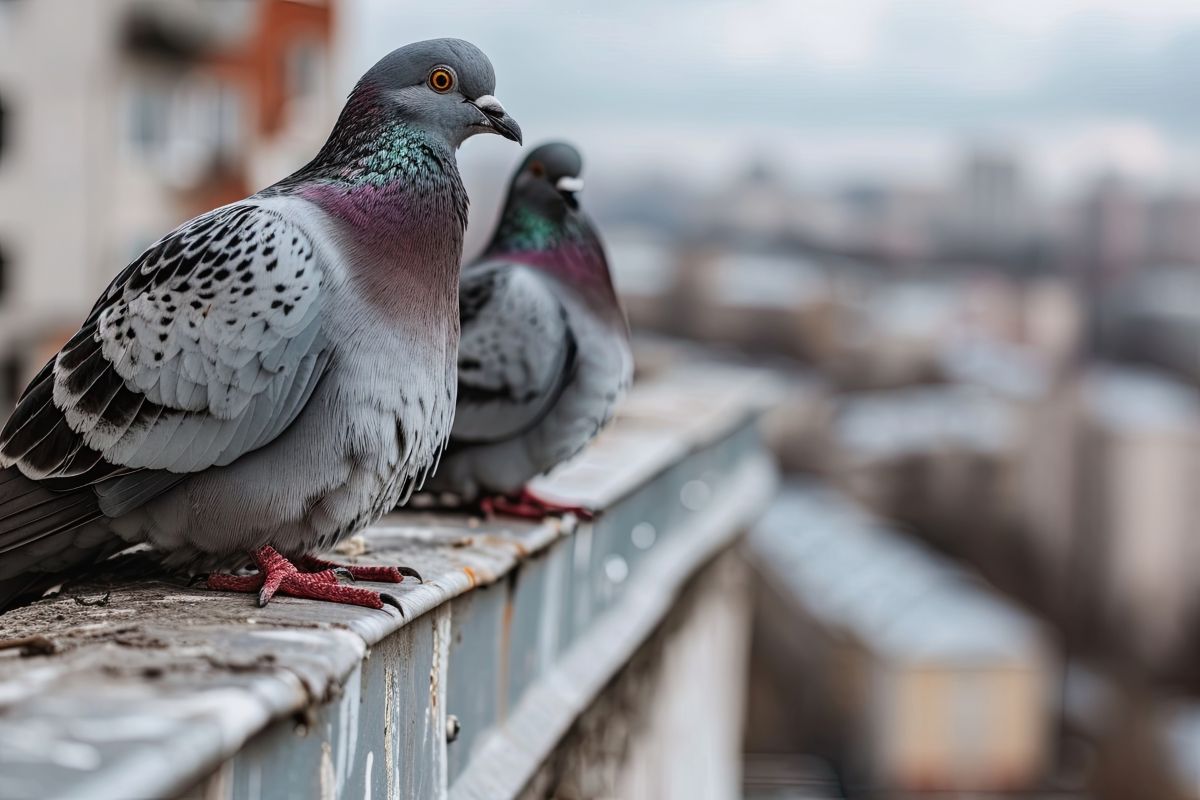
Pigeons tend to favour sheltered ledges, rooftop plant equipment, loading bays, and areas beneath solar panels. Their ancestors nested on coastal cliffs, making modern commercial architecture an ideal substitute.
Gulls often select large, flat roofs because they resemble open coastal nesting grounds. Wide rooftops provide excellent visibility and relatively few ground-based predators, making them attractive during the breeding season.
Starlings prefer enclosed cavities and narrow openings. Gaps beneath roof tiles, ventilation systems, soffits, and cladding can all provide suitable nesting opportunities.
Although each species behaves differently, they all share one characteristic: they return repeatedly to locations where previous nesting attempts have been successful.
Does building design influence nesting activity?
Absolutely.
Modern architecture frequently creates unintended nesting opportunities.
Flat roofs are particularly attractive because they provide open landing areas with minimal disturbance. Air conditioning units, pipework, solar panels, and rooftop machinery create sheltered pockets where birds can nest out of sight.
Decorative ledges and external beams provide comfortable perching locations, while poorly sealed gaps around services can offer direct access into roof voids.
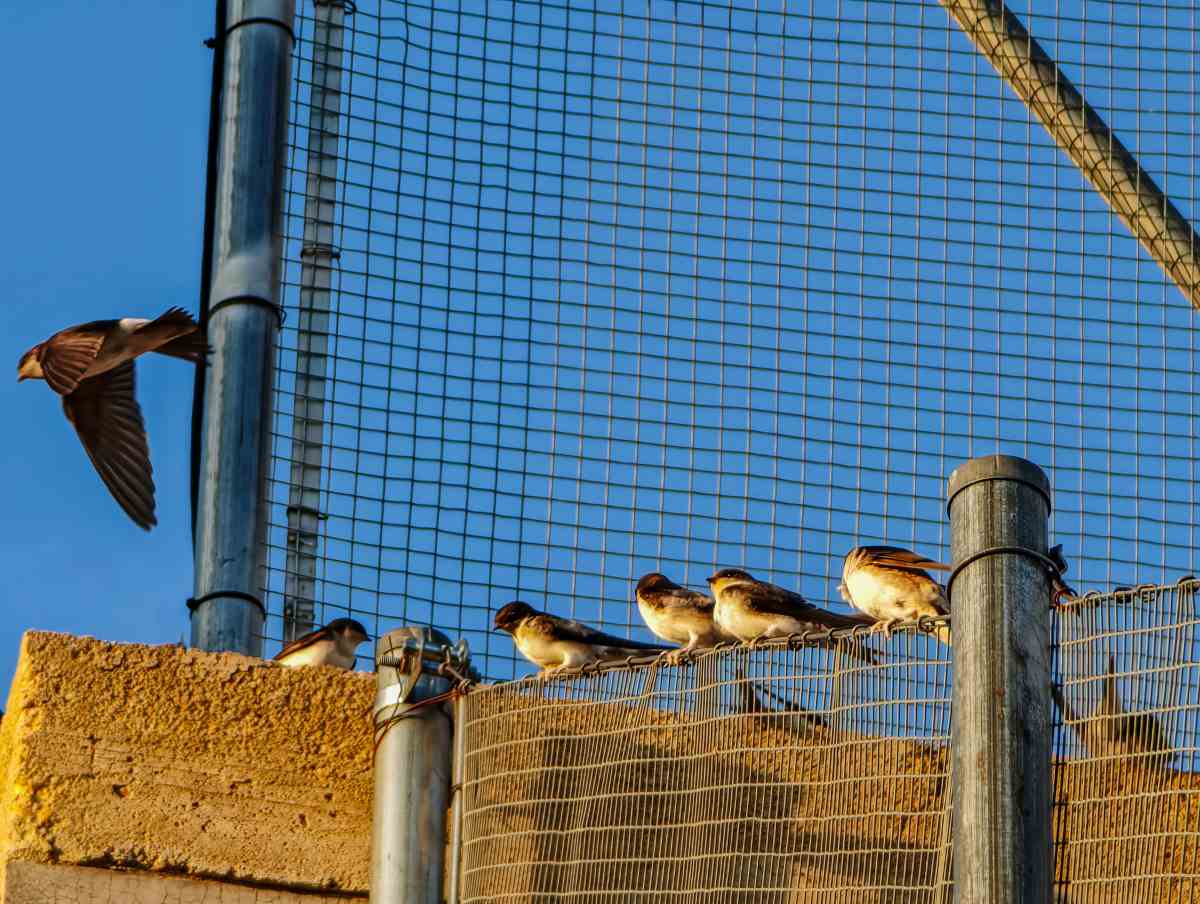
Even relatively small design features can have a significant impact. A gap of only a few centimetres may be enough for smaller species such as starlings or sparrows to establish a nest.
Birds do not assess a building in the same way humans do. Rather than considering aesthetics or function, they evaluate whether its structure provides protection from weather, predators, and competition.
How does food availability affect nesting?
Food is often the deciding factor.
A secure nesting site is valuable, but only if adult birds can easily feed themselves and their chicks nearby.
Commercial environments frequently provide abundant opportunities.
Restaurants, cafés, supermarkets, food processing facilities, and waste storage areas all generate food waste that attracts urban bird populations. Even small amounts of discarded food can support surprisingly large flocks over time.
Industrial estates may appear less obvious, but landscaped areas, standing water, and nearby agricultural land can also provide reliable feeding opportunities.
When birds discover both food and suitable nesting sites within a small area, they have little incentive to relocate.
Why do birds keep returning to the same building?
One of the defining characteristics of many urban bird species is site fidelity.
Once birds successfully raise young at a particular location, they often return year after year. Future generations may even establish territories nearby, gradually increasing the size of the local population.
This explains why bird problems rarely resolve themselves.
Simply cleaning away droppings or removing old nests does not change the underlying attraction of the building. If the structural features remain unchanged, birds are likely to return as soon as the opportunity presents itself.
Understanding how bird behaviour influences nesting patterns on buildings helps explain why long-term prevention focuses on modifying the environment rather than repeatedly chasing birds away.
Successful bird control works with natural behaviour instead of constantly fighting against it.
What problems can nesting birds cause?
It is easy to dismiss a few birds on a rooftop as little more than an inconvenience. Over time, however, the consequences become much more significant.
Bird droppings accumulate surprisingly quickly. Their acidic nature can damage roofing materials, painted surfaces, metal fixtures, and stonework if left untreated.
Nesting materials create additional problems by blocking gutters, drains, and ventilation systems. During periods of heavy rainfall, these blockages can contribute to water ingress and expensive maintenance issues.
There are also health considerations. Large accumulations of guano can harbour bacteria, fungi, and parasites, while nesting activity may attract secondary pests such as mites and insects.
For businesses operating within food production, hospitality, healthcare, or education, bird activity can also create hygiene concerns that require prompt management.
Does human behaviour encourage birds?
Sometimes without anyone realising.
Overflowing bins, unsecured waste, and outdoor eating areas all provide predictable food sources that birds quickly learn to exploit.
Employees feeding pigeons during lunch breaks, although well intentioned, can unintentionally reinforce roosting behaviour around commercial premises.
Even routine maintenance can influence nesting success. Buildings that receive infrequent roof inspections often develop small defects that birds readily exploit before anyone notices.
Birds are exceptional observers of their environment. They identify patterns remarkably quickly and repeatedly return to locations where food and shelter remain consistently available.
Why timing makes such a difference
Many businesses wait until bird activity becomes impossible to ignore before taking action.
Unfortunately, this is often the point at which prevention becomes more complicated.
Once birds establish nests and begin returning every breeding season, exclusion measures require more careful planning. Active nests may also be legally protected, meaning work sometimes has to be timed around breeding activity to remain compliant with wildlife legislation.
Early intervention avoids many of these challenges.
When birds are merely investigating a site rather than actively nesting, preventative measures are generally simpler, less disruptive, and more cost-effective.
Routine inspections can identify vulnerable areas before they become permanent nesting sites.
Why temporary deterrents often fail
Many commercial properties initially rely on inexpensive deterrents such as reflective tape, plastic predator decoys, or noise devices.
These products may discourage birds briefly, particularly if the birds have not yet established a territory.
However, urban birds are highly adaptable.
Once they realise a perceived threat poses no actual danger, they gradually ignore it. What appeared effective during the first few days often becomes little more than background scenery.
This ability to habituate explains why repeated investment in temporary deterrents frequently produces disappointing long-term results.
Changing bird behaviour permanently usually requires changing the physical environment itself.
Why physical exclusion provides lasting protection
The most reliable bird management strategies remove opportunities rather than relying on intimidation.
Properly designed exclusion systems prevent birds from accessing favoured nesting locations without causing harm. Roof voids, loading bays, service areas, and architectural recesses remain available for building maintenance while becoming inaccessible for nesting birds.
For businesses experiencing persistent bird pressure, professional bird net installation for commercial properties offers one of the most effective long-term solutions. Correctly installed netting creates a discreet physical barrier that prevents birds from establishing nests while allowing them to relocate naturally to more appropriate habitats.
Unlike temporary deterrents, exclusion systems continue working regardless of whether birds become accustomed to their surroundings because access itself has been removed.
A preventative approach benefits everyone
Birds do not deliberately target commercial buildings to create disruption. They are responding to opportunities created by modern urban environments.
A rooftop plant room provides shelter. A loading bay offers warmth. Nearby food waste supports growing populations. From the bird's perspective, these buildings represent ideal nesting habitats.
Recognising this changes how we think about bird management.
Rather than viewing birds as adversaries, effective prevention focuses on reducing conflict between wildlife and the built environment. By removing access to unsuitable nesting sites before colonies become established, businesses protect their buildings while allowing birds to seek more appropriate locations.
This approach is not only more effective over the long term; it is also more humane. It prevents birds from becoming dependent on structures where they may later require exclusion, reduces the risk of nesting in hazardous locations, and minimises the need for reactive intervention.
Ultimately, the best bird control strategies begin long before the first nest appears. They start with understanding why birds chose the building in the first place and ensuring they have every reason to look elsewhere.